tarannom taghavi. Mahboubeh pahlevan noudeh
reflection of resurrection on the Iconology of ritual motifs
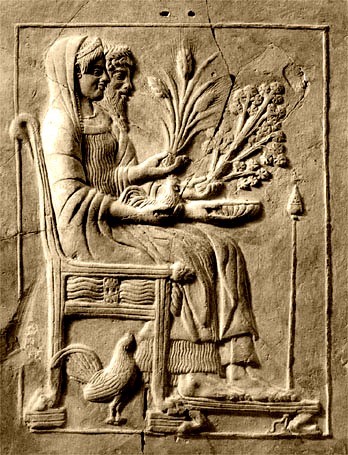
The myth of Persephone and its reflection on the ancient motifs of Locri region
Abstract
Many works of antiquity carry the events and beliefs of a nation that remains in the body of a lasting work and its motifs are embodied as a symbolic language, from a specific mentality. Iconography is a method that, by considering the visual features of the image, tries to achieve the fundamental meaning that has been prevalent in the context of society and rituals of a people from the beginning.
This study, with an Iconological approach and descriptive-analytical method, tries to study the reflection of the myth of the vegetable goddess Persephone in the sculptural motifs of the ancient Locrian area in southern Italy (fourth and fifth centuries BC) and interprets it, to achieve some of the symbolic values of this ancient land.
According to the iconographic reading, the character and symbols engraved on the works corresponded to the mythical character of Persephone and his life story and based on its ecological analysis, these motifs indicate the presence of a culture that believes in the resurrection of man as the natural world and seeks to reach the depths of mimesis (representation and re-creation); Because from the point of view of a mythical human being, an action becomes only real and real enough to repeat or imitate the eternal example.
Keywords: Resurrection, Plant Mythology, Goddess, Persephone, Dionysus, Iconology